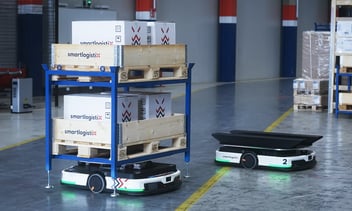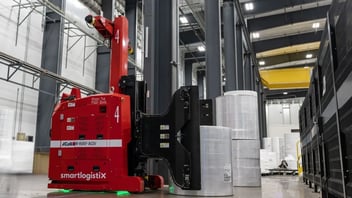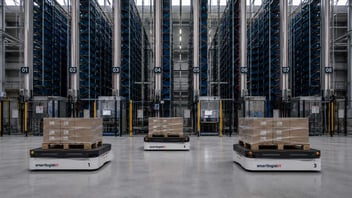
Il revamping di AGV e AMR: prolungare la vita dei sistemi di movimentazione
Il revamping di AGV e AMR, ossia l’insieme degli interventi di aggiornamento tecnico, software e meccanico su veicoli esistenti, consente di estendere la loro vita utile, aumentare l’efficienza e integrare nuove tecnologie digitali senza ricominciare da zero.
Per Smartlogistix il revamping è parte integrante della strategia di automazione intralogistica: una soluzione concreta per garantire continuità operativa, interoperabilità e sostenibilità dei sistemi di movimentazione automatizzata.
In questo articolo scoprirai:
- Che cos’è il revamping e in quali contesti applicarlo
- I vantaggi operativi e gestionali per l’azienda
- Come Smartlogistix gestisce un progetto di revamping
- Come il revamping contribuisce a costruire una smart factory efficiente e sostenibile
Che cosa significa revamping
Il revamping di AGV e AMR si distingue dalla manutenzione ordinaria perché coinvolge una riqualificazione completa dei veicoli automatizzati, con l’obiettivo di migliorare prestazioni, sicurezza e compatibilità con i moderni software di supervisione per la logistica interna.
Le aree di intervento più comuni includono:
● Retrofit hardware, con l’aggiornamento di motori, batterie o sensori a versioni più efficienti e sicure
● Upgrade software, con l’introduzione di algoritmi di controllo evoluti e funzioni di manutenzione predittiva (funzioni gestite e coordinate da software come Smart_Logistix, in grado di integrare e monitorare in tempo reale tutti i flussi di produzione e logistica interna)
● Integrazione IT/OT, per collegare i sistemi automatizzati ai software di supervisione (WMS, MES)
● Ottimizzazione dei flussi, riducendo i tempi di ciclo e migliorando la regolarità delle movimentazioni
● Adeguamento normativo
● Facile aggiunta al sistema di veicoli di nuova generazione che coesisteranno con i veicoli revampati
I benefici operativi del revamping
Le aziende che adottano piani di revamping di AGV e AMR ottengono vantaggi concreti in termini di prestazioni, sostenibilità e continuità produttiva.
Ecco quali sono i benefici derivati dal revamping:
1. Continuità operativa
Il revamping consente interventi modulari e programmati, evitando lunghi fermi impianto: la digitalizzazione e la modernizzazione progressiva dei sistemi logistici interni permettono di migliorare l’efficienza senza interrompere la produzione.
2. Incremento dell’efficienza e delle prestazioni operative
Attraverso l’ottimizzazione del software di controllo e la sostituzione di componenti obsoleti, il revamping consente di migliorare la regolarità dei flussi, ridurre i tempi di ciclo e aumentare la disponibilità dei sistemi automatizzati. La modernizzazione di impianti esistenti con soluzioni modulari e digitali consente di incrementare la produttività e l’efficienza energetica senza dover ricorrere a nuove installazioni.
3. Riduzione dei costi di manutenzione
L’introduzione di sensori smart e logiche di manutenzione predittiva riduce il rischio di guasti improvvisi, contenendo costi e downtime.
4. Benefici ambientali e circolarità
Il riutilizzo e l’aggiornamento di asset già presenti è una pratica sempre più diffusa per ridurre l’impatto ambientale del comparto logistico e allungare il ciclo di vita delle apparecchiature.
Come Smartlogistix gestisce un progetto di revamping
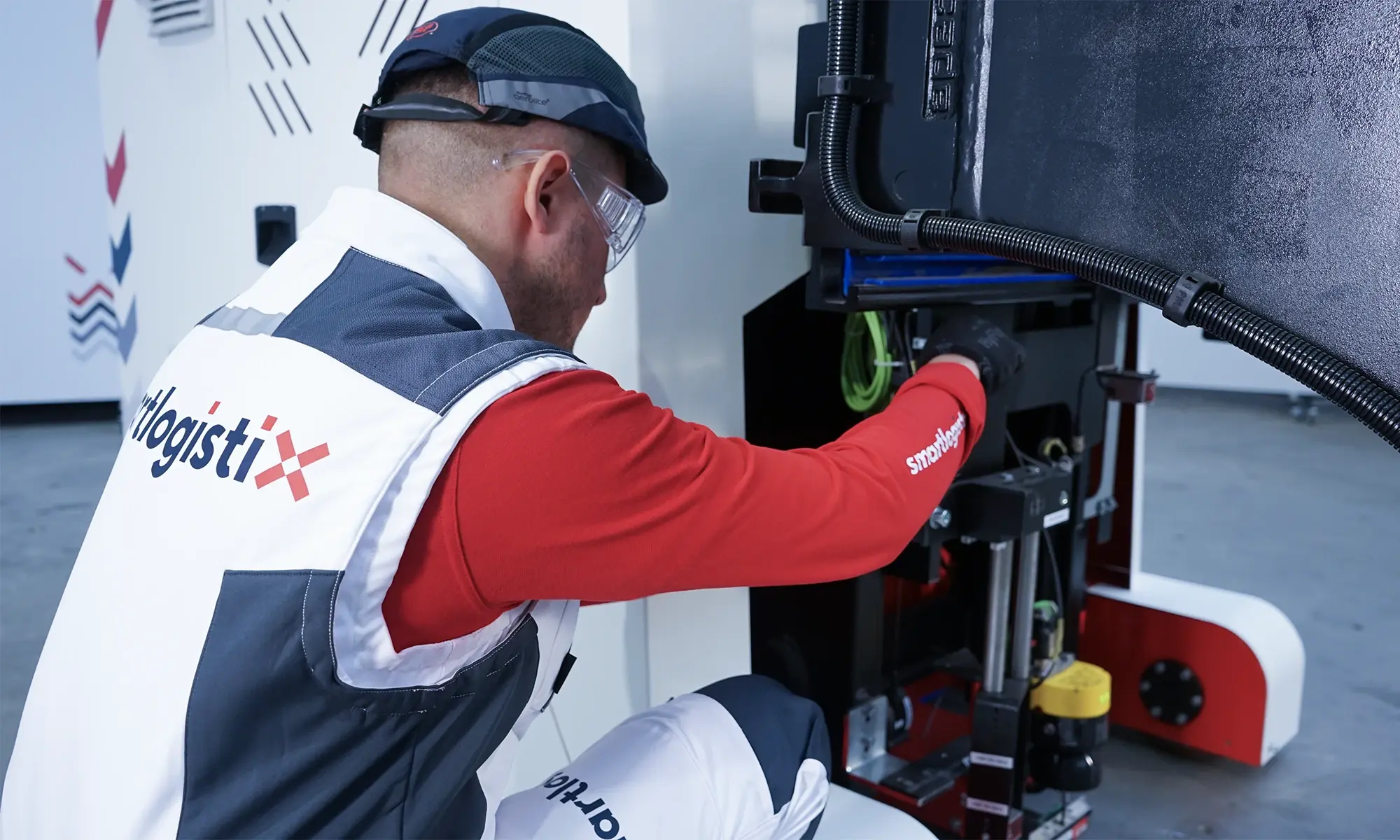
L’approccio end-to-end Smartlogistix copre l’intero ciclo operativo di un progetto di revamping di veicoli a guida autonoma (AGV/AMR): analisi, progettazione, implementazione e monitoraggio. Ogni progetto di revamping intralogistico è gestito in modo integrato, combinando competenze hardware, software e consulenziali per ottimizzare le prestazioni delle soluzioni automatizzate esistenti.
Scorri le immagini per conoscere le fasi principali di un progetto di revamping in Smartlogistix:
Questo approccio consente di ottenere un sistema più efficiente, affidabile e interoperabile, con una riduzione significativa del total cost of ownership (TCO).
Revamping e fabbrica intelligente
Il revamping è una delle leve più efficaci per evolvere verso una smart factory, dove sistemi automatizzati e digitali operano in sinergia. Nel modello Smartlogistix la modernizzazione di AGV e AMR si traduce in:
● maggiore affidabilità dei flussi materiali
● tracciabilità in tempo reale di dati e processi
● interoperabilità tra impianti e software
● riduzione dei consumi
● ripristino e miglioramento delle autonomie di esercizio e del ciclo energetico
Conclusione
Il revamping di AGV e AMR non è solo un intervento tecnico: è una strategia industriale che consente di migliorare efficienza, sostenibilità e continuità operativa dei sistemi di movimentazione automatizzata.
Grazie a un approccio integrato che combina competenze hardware, software e consulenziali, Smartlogistix supporta le aziende nel rinnovare e ottimizzare le proprie flotte di veicoli autonomi, trasformandole in infrastrutture moderne, connesse e pronte per le sfide dell’industria 4.0.
The main software functions in intralogistics
In the intralogistics landscape, software solutions are divided into several key functions:
Logistics management and device control
A central function is the coordination of warehouse operations (material movement, storage, picking) together with device control (conveyors, robots, automation). This way, decisions regarding goods remain integrated with physical operations.
Integration with business systems
The ability to interface with business information systems (ERP, planning systems, production systems) is essential: it ensures that logistics flows are aligned with business processes and that no data misalignments occur.
Synchronization with production
Another function consists of connecting internal logistics with production. Production processes, in fact, require the synchronization of material flows, order management, progress monitoring, and real-time traceability.
Central decision logic
Intralogistics operations benefit from a module that “decides” which task to assign to which resource, based on real-time inputs, operational constraints, and business strategies. This central logic ensures consistency and optimization in task assignment.
Analysis, reporting and visibility
A software component collects operational data, processes it, generates KPIs and dashboards to provide visibility into the performance of the intralogistics system, allowing corrective actions and improvements.
Supervision, simulation and digital model
Finally, there is the function of process supervision (real-time monitoring), the ability to simulate operational scenarios, and to adopt a digital model (digital twin) to predict the impact of changes before implementation.
Focus: WMS and WCS – the heart of intralogistics
WMS: the management pillar
The WMS is currently the most widespread software in logistics companies, as it provides the operational structure to control all warehouse activities: receiving, storage, picking, packing, shipping, inventory, and reporting.
A modern WMS:
● Dynamically manages storage locations (ABC rules, rotation zones)
● Supports picking strategies (lot, wave, batch)
● Interfaces with automatic identification devices (barcode, RFID)
● Provides real-time synoptics and dashboards
Click here for more information.
WCS / WES: the operational “traffic controller”
In warehouses with a high level of automation (conveyors, shuttles, robots, AGVs), a software layer is needed to translate the strategic tasks from the WMS into operational commands for the devices. This role is typically performed by the WCS or WES.
In many cases, the WMS “includes” WCS modules or communicates with an external WCS system.
| WMS – Warehouse Management System | WCS / WES – Warehouse Control / Execution System |
|
| Role | Controls warehouse operations: receiving, storage, picking, shipping and inventory. | Translates WMS tasks into operational commands for automated devices. |
| Key functions | Storage management, picking strategies, interface with barcode/RFID, real-time dashboards. | Coordinates conveyors, shuttles, robots and AGVs. |
| Relationship | The WMS may include or communicate with an external WCS system. | |
Integration with production: the role of the MES
The MES takes on the task of connecting the management level (ERP) with production execution, regulating in real time machine workloads, order progress, and synchronization of the warehouse with line consumption.
When WMS and MES are integrated, the company gains complete visibility over production, material consumption, supply needs, and order progress, with greater data consistency.
A best practice is to have middleware modules or APIs that ensure bidirectional data exchange between MES, WMS, and ERP, avoiding duplication or delays.
Click here for more information.
AGV / AMR fleet management
Automated vehicles (AGV, AMR) require a mission management module (fleet management) capable of:
● Assigning tasks (pick, transport, replenishment)
● Planning optimal routes while avoiding conflicts
● Monitoring operational status and diagnostics
● Interfacing with warehouse management systems
Middleware, supervision and data integration
An often-overlooked point is the platform that connects the various modules: ERP, WMS, MES, devices, IoT sensors. The middleware / integration layer performs critical functions:
● Translates different protocols (OPC UA, MQTT, REST API)
● Harmonizes data (mapping, normalization)
● Ensures proper latency and performance
● Provides data security and domain segregation
A well-designed architecture simplifies the adoption of analytics and digital twins in the long term.
Click here for more information.
Criteria for selecting the most suitable intralogistics software
When a company evaluates which software to adopt, several fundamental criteria are:
1) Scalability and modularity – ability to grow and add modules (WCS, fleet manager, analytics)
2) Interoperability / APIs – ease of integration with ERP, legacy systems, machines
3) Adaptability to the physical plant – compatibility with existing devices, robots, and systems
4) Performance and latency – real-time requirements, throughput
5) Maintainability and updates – updates, support, software evolution
6) Security and reliability – encryption, audit, user restrictions
7) Analysis and data visualization – dashboards, KPIs, advanced reporting
A careful assessment of these factors helps avoid “lock-in” errors or information silos.
Smartlogistix offering
Smartlogistix offers a suite that includes:
● WMS module with real-time tracking and intelligent storage strategies
● “Fleet management” module for robots, AGVs, and handling systems
● Interfaces with ERP, MES, and external machines
● Reporting, dashboards, and analytics for monitoring and continuous improvement
Thanks to its modularity and integration, the suite easily adapts to both existing and revamping plants, reducing reconfiguration costs.
Visit the Smartlogistix software solutions page for more details on specific modules and use cases.
Conclusion
Choosing intralogistics software is a strategic decision: having robots or physical automation alone is not enough if flows are not managed by consistent software logic. WMS, WCS, MES, fleet management, and middleware are the building blocks of an integrated ecosystem that turns internal logistics into a competitive advantage.
Smartlogistix solutions make it possible to automate and digitize production and intralogistics processes, integrating hardware, data, and people into a single modular platform designed to evolve over time along with business needs.