Smartlogistix opens the doors to its new intralogistics automation showroom
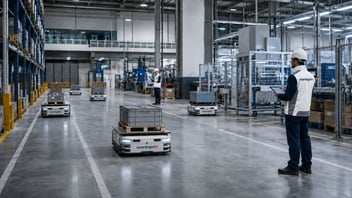
Autonomous guided vehicles, material handling solutions, automated warehouses and integrated software platforms: in Porcari, Smartlogistix presents a permanent space where Smart Factory technologies can be seen in action.
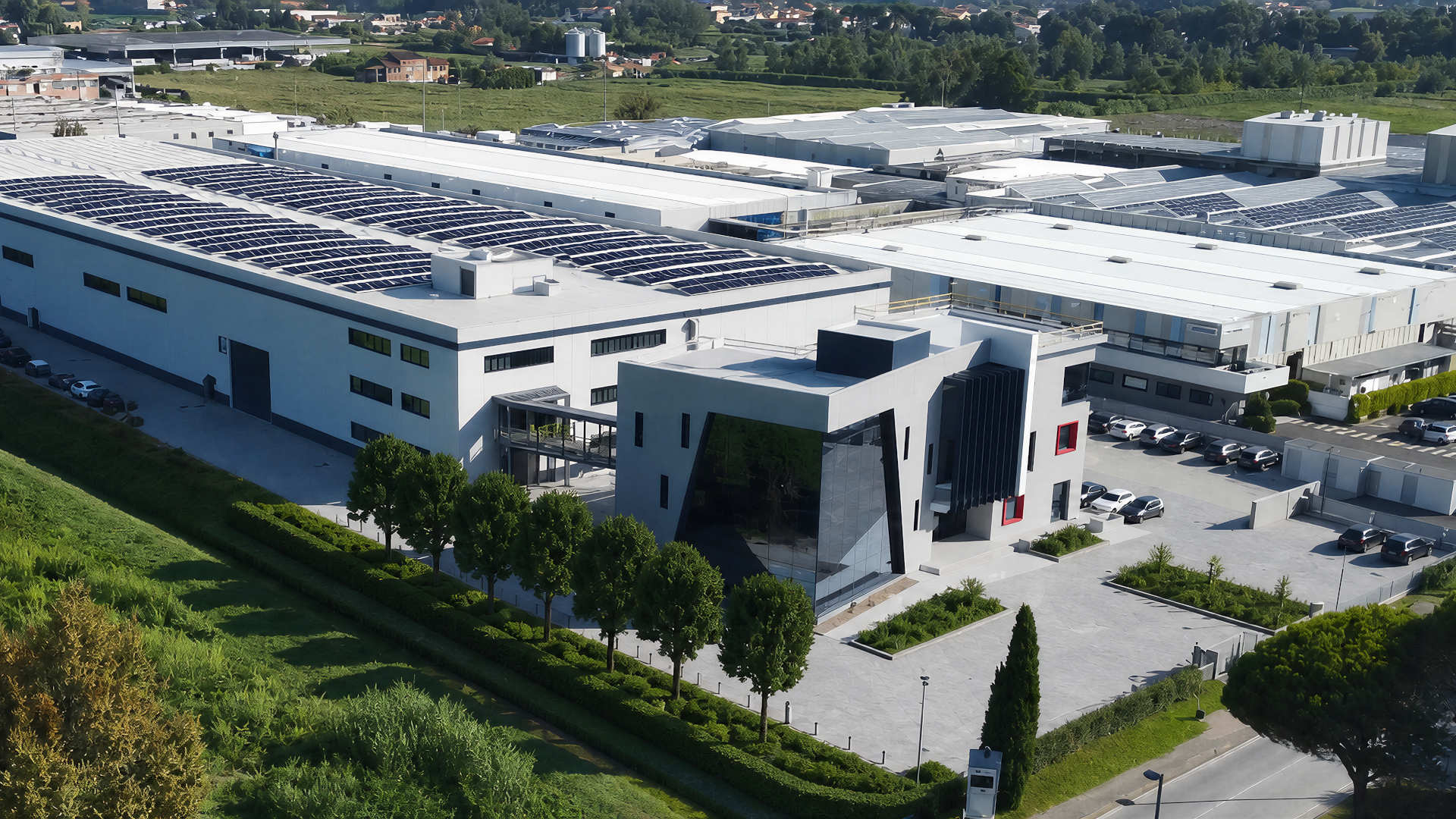
From October 7 to 9, alongside MIAC 2026, Smartlogistix will open the doors to its showroom at its new facilities in Via del Centenario, Porcari (Lucca). A permanent space dedicated to showcasing the latest solutions for the automation and digitalization of intralogistics processes.
The showroom has been created to give customers and partners the opportunity to see first-hand how hardware and software technologies can work together to manage material flows within factories and logistics centers in an integrated way. More than a simple product display, it is a demonstration environment where visitors can see real applications in operation, engage with Smartlogistix specialists and explore different automation opportunities.
AGVs and AMRs for increasingly flexible material handling
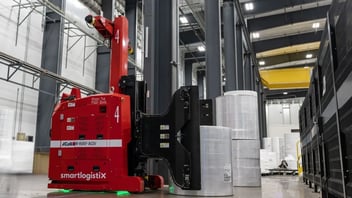
The area dedicated to automated vehicles features several solutions from the Smartlogistix range, including the new JUPITER Board, specifically developed for material handling applications in the corrugated board industry and integrated with a Fosber unwinder. The area also includes several models from the PLUTO range, the AMR-X and AMR-FX autonomous mobile robots, and a dedicated revamping section designed to extend the operational life of existing vehicles through hardware and software upgrades.
Automation in motion: from reel handling to palletizing
The second area of the showroom is dedicated to Material Handling and demonstrates how different technologies can be integrated within a single automated flow. Applications on display include an automated reel packaging system for the tissue, paper and nonwovens industries, integrated with an AGV, as well as the Pall&Play palletizing system by Mac Due Impianti, combined with an AMR-X autonomous mobile robot.
The aim is to demonstrate how automation can extend across the entire process, from material handling through to end-of-line operations.
Software as the orchestrator of the Smart Factory
Completing the experience is the Software Demo Area, dedicated to digital platforms for monitoring, controlling and managing intralogistics processes in an integrated way. Solutions on display include OMNIA DP, Smartlogistix Hyperstrator and the Smartlogistix WMS, designed to connect assets, coordinate different technologies and provide real-time visibility over operations.
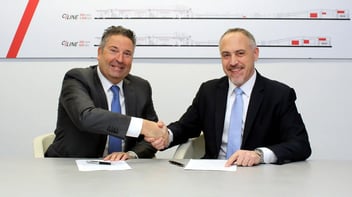
“Faced with the growing complexity of production and logistics processes, companies are seeking systems that are increasingly flexible, scalable, and interconnected,” says Mauro Celli, a shareholder of the Italia Technology Alliance holding company and President of Smartlogistix.“The significant investment in this intralogistics testing lab is designed to go beyond the paper industry and serve various supply chains, from corrugated cardboard to thermoformed products, all the way to the personal hygiene sector. It is a shared space where customers, partners, and experts can experience the technologies firsthand, tackle real-world challenges, and develop phased automation strategies. The goal is clear: to free people from repetitive, low-value-added tasks, while maximizing safety and efficiency.”
SMARTLOGISTIX
Smartlogistix develops integrated industrial automation and intralogistics solutions, combining software, material handling systems, mobile robots and automated warehousing technologies.The company supports customers throughout every stage of a project, from needs analysis through to solution implementation, with the aim of automating and digitalizing the handling, transportation and storage of raw materials, semi-finished goods and finished products, contributing to the development of increasingly intelligent and interconnected factories.
About FOSBER
Fosber is an international group and a global leader in the design and manufacturing of corrugators and machinery for the corrugated cardboard industry. Founded in Lucca in 1978, it operates worldwide with headquarters in Italy and subsidiaries in the United States and China. The Group provides complete lines, retrofits, and advanced technological solutions for the corrugated cardboard industry.


A methodological approach to ROI calculation
The correct evaluation of ROI is not limited to the comparison between initial investment and direct benefits, but requires the definition of a financial model that considers the entire duration of the project and all the variables at play.
Fundamental quantitative KPIs
To translate qualitative benefits into clear financial indicators, it is essential to define a series of quantifiable Key Performance Indicators (KPIs):
Operating costs (OpEX)
- Cost per unit handled: calculation based on the total cost of labor and energy divided by the number of units managed, comparing manual and automated systems.
- Maintenance: comparative analysis between costs and productivity impact of a predictive maintenance model (typical for automation) compared to traditional corrective maintenance.
- Energy Consumption: specific measurement of consumption (kWh/cycle) of AGVs/AMRs and automated systems, compared to the consumption of traditional internal combustion or electric forklifts.
Productivity
- Hourly throughput: increase in the number of units or pallets handled per hour, as a result of continuous 24/7 operation.
- Average order cycle time: reduction of the average time needed to complete an order, from receipt to shipment.
- OEE (Overall Equipment Effectiveness): increase in overall plant efficiency, measuring availability, performance and quality.
Space optimization
- Volumetric capacity: increase in storage capacity per cubic meter, possible thanks to the implementation of vertical warehouses and shuttles that maximize density.
-
Footprint reduction: less need to physically expand the warehouse, with consequent savings on real estate and energy costs.
Data accuracy and traceability
-
Inventory errors: drastic reduction in the percentage of inventory errors (e.g. from 2-3% to a value below 0.1%), thanks to the precision of automated systems.
-
Picking error reduction: Fewer errors in item picking, with a direct impact on reducing costs from returns and management expenses.
Workplace safety
- Accidents and associated costs: decrease in the number of workplace accidents (e.g. per million hours worked) and reduction of insurance costs and operational downtime.
Financial models: beyond the basic formula
The evaluation of long-term CapEx projects requires rigorous financial modeling to avoid underestimating costs and overestimating benefits.
- NPV (Net Present Value): calculates the present value of future cash flows generated by the project, discounting them at a discount rate. A project is financially valid if the NPV is positive, indicating that future benefits exceed the initial investment.
- IRR (Internal Rate of Return): represents the discount rate that zeros the NPV. A project is acceptable if the IRR is higher than the company's cost of capital, signaling good intrinsic profitability of the investment.
- TCO (Total Cost of Ownership): a comprehensive TCO analysis is fundamental. It includes not only the initial CapEx (hardware, software, infrastructure), but also recurring operational costs (OpEx) over a time horizon of 5-10 years. These costs include maintenance, energy consumption, software licenses, technical assistance and upgrade costs, often overlooked in superficial analyses.

ROI analysis phases
An effective evaluation is structured in a methodological process that ranges from data collection to continuous analysis.
Phase 1: Baseline & Data acquisition
This phase consists of creating a precise and scientific snapshot of the current situation. Monitoring with IoT sensors on existing machinery, time-and-motion studies and extraction of historical data from WMS, ERP and other business systems are crucial. The objective is to quantify the costs, times and errors of manual processes to have a solid comparison base.
Integration with OT and WMS systems is guaranteed by Smart_Logistix.
Phase 2: Technical-economic modeling and simulation
In this phase the financial model is built and assumptions are validated. Through industrial simulation software (such as FlexSim or AnyLogic), it is possible to create a digital twin of the warehouse and test automated scenarios. This allows accurate estimation of throughput, cycle times and impact on flows, before committing capital. The DCF (Discounted Cash Flow) model is enriched with sensitivity analysis to test the project's robustness against variations in key variables such as energy cost, interest rates or project duration.
Phase 3: Post-implementation monitoring
After installation, the verification phase is crucial to validate predictions. Through real-time analytics, telematic data collected from robots, WMS/WCS and SCADA systems are compared with baseline KPIs and initial projections. Business Intelligence (BI) dashboards play a fundamental role in providing a clear vision of performance and identifying continuous optimization opportunities.
Recommended operational strategy
Economic justification must be accompanied by an operational strategy that guarantees its success.
Modular planning and retrofitting
For an existing infrastructure (brownfield), the ideal solution is not a complete revolution, but a planned evolution. A modular and scalable approach allows automation to be introduced gradually, starting from areas with a faster Payback Period. The integration of mobile robots in existing warehouses, or retrofitting of traditional systems, reduces risks and minimizes operational downtime, making the transition efficient.
Personnel involvement
Automation is not only a technological challenge, but also a cultural one. Personnel must be involved from the early phases of the project, through transparent communication and a continuous training program. The requalification of operators for new roles (e.g. supervision, maintenance) not only promotes acceptance, but transforms personnel into a strategic resource for managing new technologies.
Common errors to avoid
Field experience teaches that some recurring errors can undermine ROI analysis:
- Considering only initial CapEx, neglecting TCO: ignoring recurring costs such as software licenses, predictive maintenance and energy consumption can compromise the validity of the calculation.
- Overestimating benefits: basing projections on overly optimistic scenarios, without considering possible delays or the personnel learning curve, can lead to disappointing results.
- Ignoring the key role of change management: failure to manage the impact on personnel can cause resistance that translates into low productivity and failure to achieve objectives.
Conclusion
Evaluating ROI in automation investments is a multidisciplinary process that goes beyond pure economic calculations. For a C-level, engineers and specialists audience, a rigorous approach that integrates advanced financial methodologies, detailed TCO analysis, and the use of simulation and analytics tools is the key to making solid strategic decisions.
Companies that adopt this perspective will not only obtain clear and validated economic justification, but will also equip themselves with an operational roadmap to maximize the value of investment over time, strengthening their competitive position in a continuously evolving market.
Do you want to build a custom financial model, compare AGV/AMR solutions and estimate the real ROI of your infrastructure? Contact us: our experts are ready to guide you with cutting-edge tools and expertise.